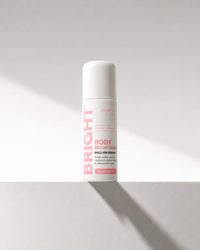

Underarms · Guide
Dark underarms: why they happen, and what can help them fade
 By the Skinstem team, founded by pharmacist Shaista Sophia
Updated 19 Oct 2026

Maybe you noticed it in the mirror, or in a photo, or you've stopped lifting your arms in sleeveless tops. Zakithi, one of our customers, noticed hers when she started training more: "I’ve started working out more and so I’ve been more aware of the hyperpigmentation under my armpits."
Most women try lemon, baking soda or a harder scrub first. Those can make it worse. This guide is about what is actually going on under the skin, and the three steps that can help it fade, including how long it really takes.
In this guide
- Why underarms go darker
- When to see a doctor first
- What to skip
- Three steps that can help
- The roll-on we make
- Common questions
Our bias, out in the open: Skinstem was started by pharmacist Shaista Sophia, and we make a roll-on for these marks. You'll find it after step 3.
Part 1 · The likely cause
Why underarms go darker: irritation, again and again
Your underarms get a rough deal. The skin there has more sweat glands and hair roots than most of your body, and it loses more water, so its protective layer is weaker and it gets irritated easily 1. Irritated skin can make extra colour. Irritate it again and again, and you get the cycle below, which researchers think is behind most dark underarms 1, 2, 4.
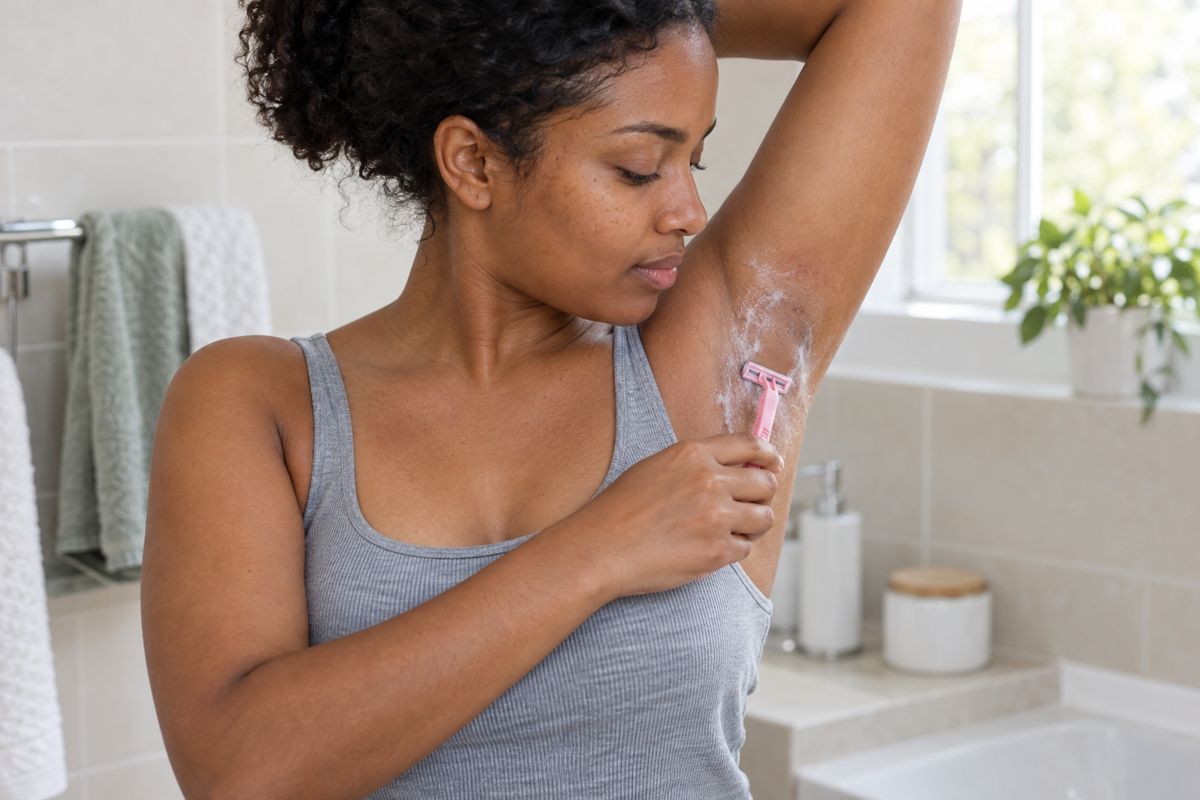
1. Shave, pluck or rub
A razor, wax strip, tweezers, or a top that rubs.
2. The skin gets irritated
Maybe a little redness, maybe a few small bumps.
3. The skin makes extra colour
Irritated skin can make extra melanin, the stuff that gives skin its colour 3.
4. A darker patch stays
The irritation settles. The colour can stay.
Then you shave again, and it can start all over.
One thing to clear up: dark underarms have nothing to do with being unclean. The extra colour sits inside the skin 3, 4, where soap and scrubbing can't reach it.
On brown skin, this kind of mark shows up more and lasts longer 3, 5.
adults said their underarms had darkened, in a 2025 online survey of 48,000 adults in 34 countries 9.
One catch: a skincare company helped run the survey. And we found no South African figure.See a doctor before you try any product, ours included, if the skin looks or feels like this
- Thick, rough or velvety, more than just darker 6, 7
- Also dark on your neck or in your groin 6
- It came on suddenly 6
- Pink-brown patches with fine scales 8
- Darker skin in many places, and you feel tired or are losing weight 21
These can be signs of something a doctor should treat, like insulin resistance or a skin infection. A dark-mark product won't fix them 1, 6. Better to check now than after weeks of trying.
Part 2 · What to skip
What to skip: the popular home fixes
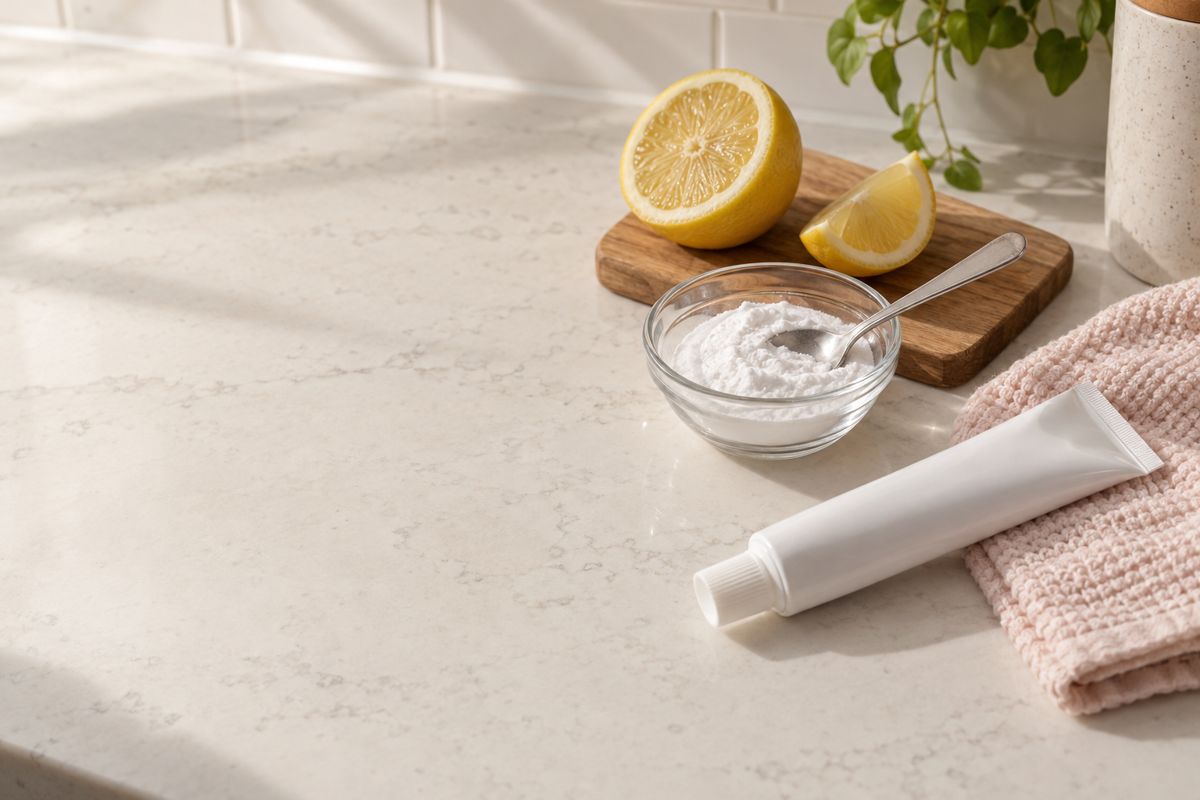
We'd skip every one of these. Irritation is the likely cause, so a fix that irritates can make the marks darker 5.
Lemon or lime juice
Why people try it: It sounds natural and gentle.
This one can backfire. Lime juice, and lemon in one reported case, can burn skin that then sees sun, and leave dark marks that may last for years 12, 22. And we found no study showing lemon fades dark underarms.
Baking soda
Why people try it: It's cheap, and it's already in the cupboard.
Healthy skin is mildly acidic. Baking soda is alkaline (see the scale below), and it can dry skin out 10, 11. No study we found shows it fades dark underarms.
Hard scrubbing
Why people try it: If it looks like dirt, scrub it off.
The colour sits inside the skin, so a scrub can't reach it 3. Scrub until it stings and you've added irritation, which can cause or worsen this kind of darkening 5.
Cheap "whitening" creams from informal sellers
Why people try it: A strong cream will fix it fast.
In Cape Town, researchers tested 29 creams bought from informal sellers. 22 had banned ingredients like mercury, steroids or hydroquinone, and none of the 12 with mercury listed it on the label 13. Of everything on this list, these creams carry the most risk, so skip them.
Part 3 · What helps
Three steps that can help, and the hard part: waiting 8 to 12 weeks
Ease off what irritates the skin
- Shave at the end of your shower, when hair is soft 14.
- Use a shaving cream, and shave the way the hair grows 14.
- Change a disposable razor after 5 to 7 shaves 14.
- Pluck less 4.
- Swap any antiperspirant or deodorant that stings or itches 18.
- Wear looser tops when you can.
These shaving tips come from dermatologists' advice on razor bumps 14. Nobody has tested whether easing off fades marks by itself. But it takes away the most likely cause, and that is where doctors start too 20.
Never put a dark-mark product on skin that's red, broken, stinging or just shaved. Let it calm down first.
Put a dark-mark product on twice a day
That means a cream or serum made to help fade dark marks. On underarms, researchers have tested niacinamide, glycolic acid, tretinoin (a prescription cream) and a few plant extracts 1, 2. Every one of those studies was small, so here's the honest version: expect slow change that is often partial.
Give it at least 8 to 12 weeks before you judge it
Skin is slow. Its top layer renews in about 3 weeks, and slower as you get older 15. Marks take longer than that to fade. The underarm studies we found ran about 8 to 12 weeks, and marks you've had for years can take months or longer 1, 2, 5. So 8 to 12 weeks is when we'd judge it, not before.
- Weeks 0 to 2Take a photo in good light, then just build the habit. Too early to see much.
- Weeks 2 to 4Your top layer of skin has renewed about once. Still too early to judge.
- Weeks 4 to 8Keep going, even if it looks the same. Any change is usually small here.
- Weeks 8 to 12Now judge it, next to that first photo. Older marks can take longer.
This is a drawing, not a customer photo. The aim is for the dark patch to fade while the skin around it stays the same colour.
Part 4 · Skinstem's roll-on
The roll-on we made for step 2
Shaista started Skinstem for the bikini line. Then the DMs about underarms started.
"Years later, I started hearing the same concerns from so many of you: bikini pigmentation, underarms, inner thighs. The questions, the DMs, the quiet conversations."
Shaista Sophia, on InstagramSo we made the Body Brightening Roll-On. It puts 5% tranexamic acid, niacinamide, kojic acid and licorice in one bottle, and you roll it straight onto the dark patch.
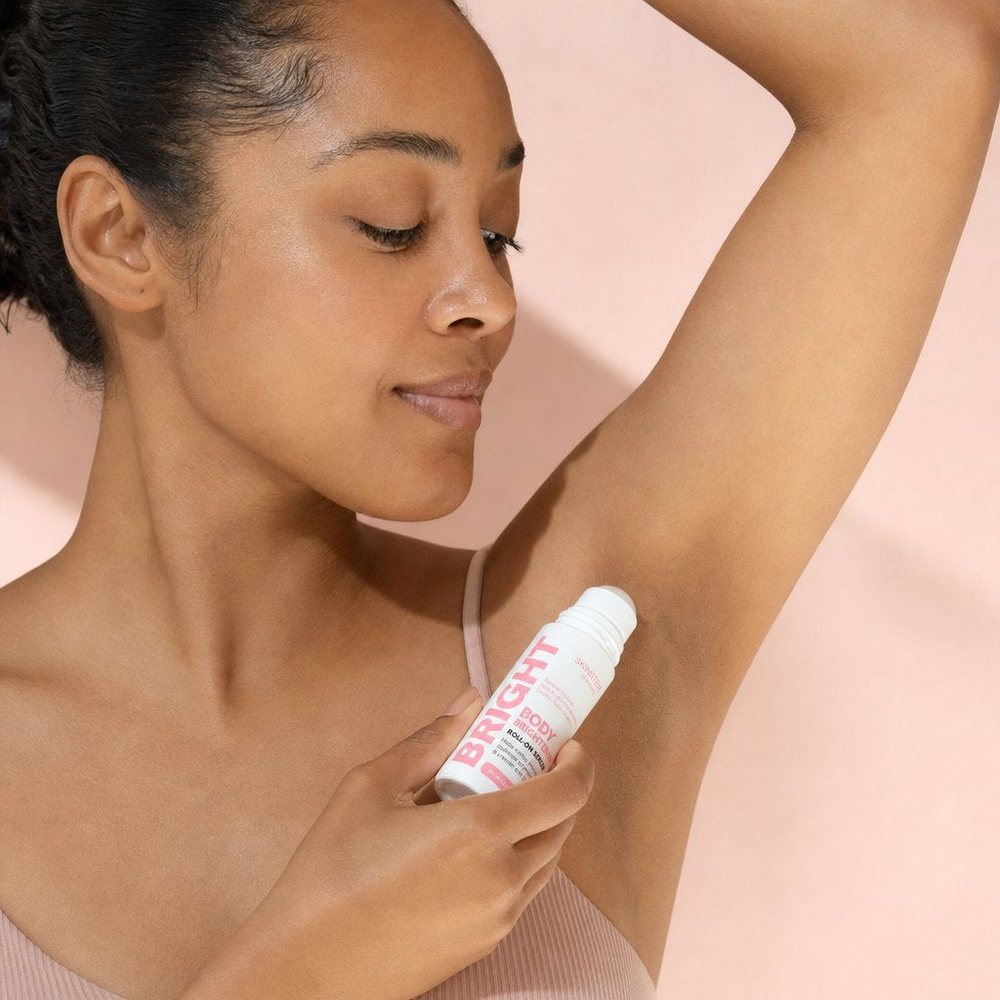
Helps fade dark marks on underarms
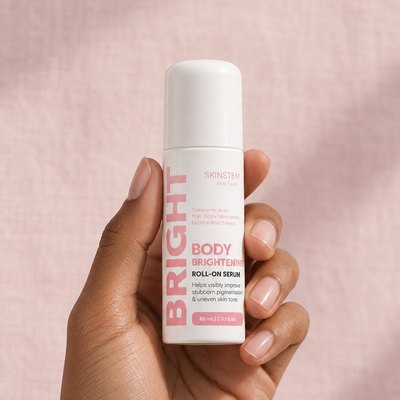
Roll it onto the dark patch twice a day. Give it at least 8 to 12 weeks before you judge it.
R19960 ml, lasts 8 to 10 weeksDelivery R100. Free when you spend R650.
- It won't lighten your natural skin. It helps dark marks look closer to your own skin tone.
- Not an antiperspirant or deodorant. It won't stop sweat or smell, so keep using your own, as long as it doesn't sting.
- Contains fragrance. Patch test first. If it stings or itches, stop.
- Made by South African pharmacist Shaista Sophia. Her skincare won Glamour and woman&home beauty awards.
 or instant EFT
10/10 minus nothing
"I’ve started working out more and so I’ve been more aware of the hyperpigmentation under my armpits. I reached out to Skinstem who were incredibly efficient with replies. They suggested this roll on. Day one I did a skin patch test. And the following day I started using it as per the instruction, 4 days in (ie 7 applications in) I already see remarkable changes! I’ll definitely continue buying this. Amazing product and great job to the team!"
✓ Verified buyer · 13 Oct 2026
 Bought: Roll-On Serum
Zakithi saw a change in four days. That's fast. Most women won't see a change that quickly, so give it 8 to 12 weeks before you judge it. Judge.me checks each review against a real order before it says "Verified buyer".
How to use it in three steps
- 1Patch test firstPut a little on a small spot and wait 24 hours. If your skin reacts, wash it off and don't use it again. Sensitive skin? Dermatologists suggest testing twice a day for 7 to 10 days 19.
- 2Roll a thin layer onto the dark markOn clean, dry skin that isn't red or sore. New to products like this? Use it once a day for the first week, then morning and night. In Shaista's words: "You literally just roll it on, let it absorb and go."
- 3Let it dry, then put on deodorant or get dressedIt dries clear.
Step 1 is free, so start tonight. Shave at the end of your shower, use a shaving cream, put in a fresh razor, and swap anything that stings. The roll-on will still be here.
For readers who want the detail
Want the science? Here's what each ingredient has really been tested on
- Tranexamic acid (5%)Studied on faces
The one ingredient we list an amount for: 5%. It has been studied for dark marks in small groups, mostly on the face 16. One small trial found it did no better than a plain gel 23. We found no study on underarms.
- NiacinamideStudied on underarms
The only one of the four with an underarm trial we could find. In it, 24 women used 4% niacinamide for 9 weeks. About 1 in 4 had a good to excellent result, against about 1 in 17 on a plain cream 2. Our label doesn't say how much niacinamide is in the roll-on, so don't read that 4% as ours.
- Kojic acidNot studied on underarms
Often used in dark-mark products. A safety panel found it safe in cosmetics up to 1% 17. Our label doesn't list the kojic acid amount either. It can cause a skin reaction in some people 5, which is one more reason to patch test.
- Licorice extractNot studied on underarms
Used to calm skin and in dark-mark products. The studies are small and none were on underarms 24.
We'd rather you know this before you buy than after. Change is slow, and a patch test comes first.
Your questions
Quick answers: deodorant, diabetes, lemon, and how long it takes
Why are my underarms dark?
Does shaving or waxing make underarms darker?
Do deodorants or antiperspirants cause dark underarms?
Is the Skinstem roll-on a deodorant or antiperspirant?
No. It looks like one, but it won't stop sweat or smell. Keep using your own, as long as it doesn't sting. The roll-on does contain fragrance, so patch test it first.
Are dark underarms normal?
They're common. In a 2025 online survey of 48,000 adults in 34 countries, about 1 in 6 said their underarms had darkened 9. We found no South African figure.
Are dark underarms permanent?
How do you get rid of dark underarms?
Not by washing or scrubbing, and not in a day. Ease off what irritates the skin, put a dark-mark product on twice a day on skin that isn't red or sore, and give it at least 8 to 12 weeks before you judge it.
How long does it take for dark underarms to fade? Can it happen in 3 days?
Do lemon, baking soda, toothpaste or concealer help?
We'd skip the first three. We found no study showing lemon, baking soda or toothpaste fade dark underarms. Lime and lemon juice on skin that then sees sun can burn it, and baking soda can dry skin out 11, 12, 22. Concealer is fine for a day out. It hides the marks for the day and does nothing to fade them.
Are dark underarms a sign of diabetes or PCOS?
Should I use an underarm whitening cream?
We'd skip them. In a Cape Town study, 22 of 29 creams bought from informal sellers had banned ingredients like mercury or steroids 13. Fading dark marks is not the same as changing your natural skin colour.
Can I use the roll-on on my inner thighs and bikini line?
Yes. Our roll-on is made for dark marks on underarms, inner thighs, the bikini line and the outer skin of the vulva area. Outer skin only, never inside. Patch test first, and use it on skin that isn't red or sore.
Dark underarms can fade, slowly. It starts with easing off what irritates them.
Twice a day, straight onto the dark patch.
R19960 ml, lasts 8 to 10 weeks- It won't lighten your natural skin. It helps dark marks look closer to your own skin tone.
- Made by South African pharmacist Shaista Sophia. Her skincare won Glamour and woman&home beauty awards.
- Patch test first. Wait 24 hours before you use it all over.
Delivery R100. Free when you spend R650.
Sources (24) · Last checked 19 October 2026 · General information, not medical advice
- Vahabi SM et al. Axillary hyperpigmentation treatment: a systematic review of the literature. J Cosmet Dermatol, 2025. pmc.ncbi.nlm.nih.gov
- Castanedo-Cazares JP et al. Topical niacinamide 4% and desonide 0.05% for treatment of axillary hyperpigmentation: a randomized, double-blind, placebo-controlled study. Clin Cosmet Investig Dermatol, 2013. pmc.ncbi.nlm.nih.gov
- DermNet. Postinflammatory hyperpigmentation. dermnetnz.org
- James AG et al. Histological evaluation of hyperpigmentation on female Filipino axillary skin. Int J Cosmet Sci, 2006. pubmed.ncbi.nlm.nih.gov
- Davis EC, Callender VD. Postinflammatory hyperpigmentation: a review of the epidemiology, clinical features, and treatment options in skin of color. J Clin Aesthet Dermatol, 2010. pmc.ncbi.nlm.nih.gov
- DermNet. Acanthosis nigricans. dermnetnz.org
- American Academy of Dermatology. Acanthosis nigricans: overview. www.aad.org
- DermNet. Erythrasma. dermnetnz.org
- Passeron T et al. Pigmentary disorders around the world: self-reported prevalence and impact on quality of life and social stigmatization. J Invest Dermatol, 2025. pubmed.ncbi.nlm.nih.gov
- Lambers H et al. Natural skin surface pH is on average below 5, which is beneficial for its resident flora. Int J Cosmet Sci, 2006. pubmed.ncbi.nlm.nih.gov
- Healthline. Baking soda for underarms. www.healthline.com
- DermNet. Phytophotodermatitis. dermnetnz.org
- Maneli MH et al. Combinations of potent topical steroids, mercury and hydroquinone are common in internationally manufactured skin-lightening products: a spectroscopic study. Clin Exp Dermatol, 2016. pubmed.ncbi.nlm.nih.gov
- American Academy of Dermatology. 6 razor bump prevention tips from dermatologists. www.aad.org
- Grove GL, Kligman AM. Age-associated changes in human epidermal cell renewal. J Gerontol, 1983. pubmed.ncbi.nlm.nih.gov
- Alsharif SH et al. Efficacy and best mode of delivery for tranexamic acid in post-inflammatory hyperpigmentation: a systematic review. Clin Cosmet Investig Dermatol, 2022. pubmed.ncbi.nlm.nih.gov
- Burnett CL et al. Final report of the safety assessment of kojic acid as used in cosmetics. Int J Toxicol, 2010. pubmed.ncbi.nlm.nih.gov
- DermNet. Irritating skin problems affecting the axilla (case 4: irritant and allergic contact dermatitis). dermnetnz.org
- American Academy of Dermatology. How to test skin care products. www.aad.org
- Passeron T et al. Global consensus on the management of melanin hyperpigmentation disorders. J Eur Acad Dermatol Venereol, 2025. pmc.ncbi.nlm.nih.gov
- DermNet. Addison disease. dermnetnz.org
- Matthews MR et al. Lemons in the Arizona sunshine: the effects of furocoumarins leading to phytophotodermatitis and burn-like injuries. pubmed.ncbi.nlm.nih.gov
- Kanechorn Na Ayuthaya P et al. Topical 5% tranexamic acid for the treatment of melasma in Asians: a double-blind randomized controlled clinical trial. J Cosmet Laser Ther, 2012. pubmed.ncbi.nlm.nih.gov
- Nie X et al. Review of glabridin, the licorice extract used for skin pigmentation. Clin Cosmet Investig Dermatol, 2026. pmc.ncbi.nlm.nih.gov
If you're worried about your skin, see a doctor or pharmacist.